


How to play MapRaiders
This page explains how to play MapRaiders, the Real-World Territory Card MMO. Outside, your route draws borders on the real map. At the table, a commander and fifty cards settle the duel.
Live in the browser. Something new arrives every week.
One real world map, three ways to play
MapRaiders is a location-based game, an open-world action RPG and a trading card game (TCG) on one real world map: a Pokémon GO alternative you can also play from home. Walk, run or cycle outside with GPS, and your loops become territory on the real map. From home, your own 3D character plays the same map, the same streets and the same territory, live with the same players, with quests, raids at spawn points and vehicles. In that world you also collect trading cards for a card game of their own, with commander decks and live duels for land. All of it is one story, The Collision. Each season is a chapter, and what a season brings never returns but stays valid.
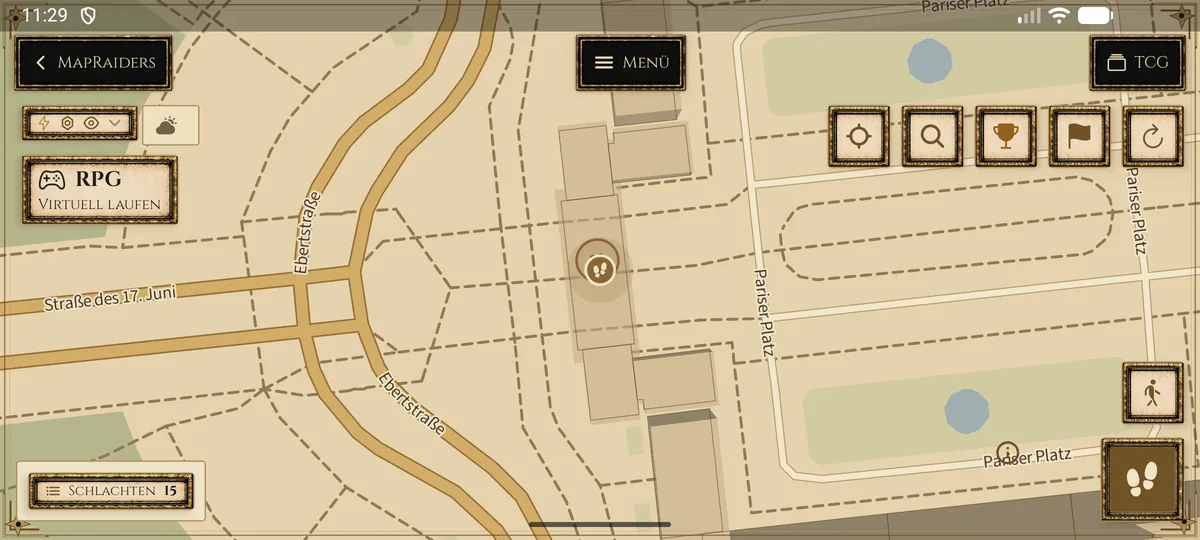
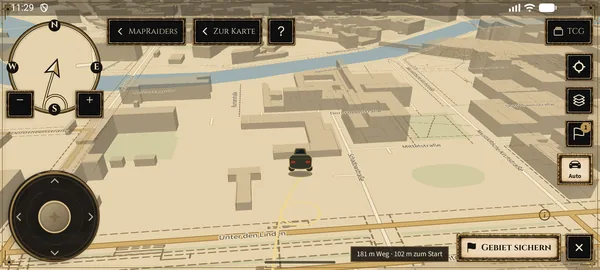
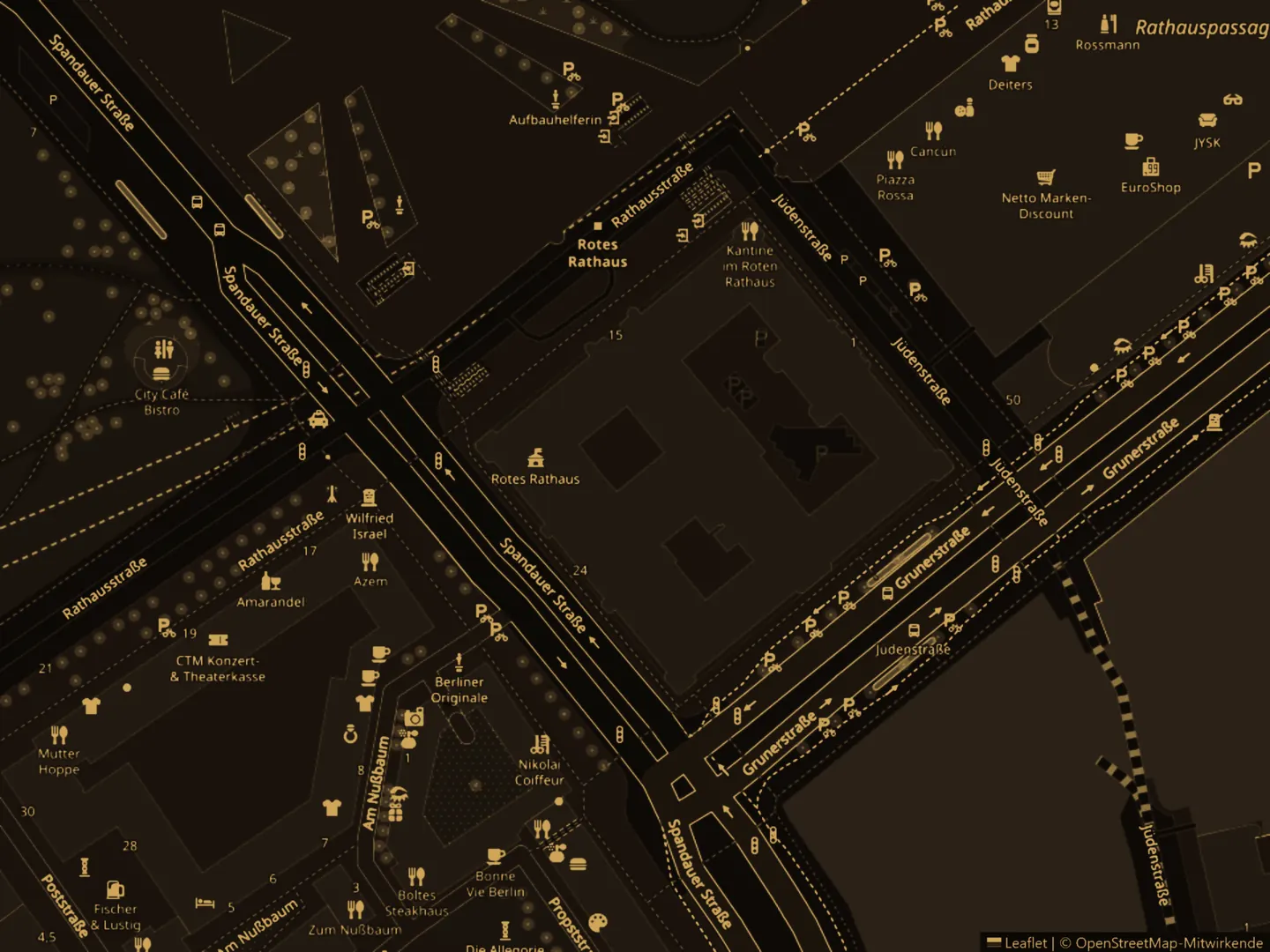
Open the mapThe real street map in parchment style, here at Pariser Platz in Berlin. Everyone plays on the same map. 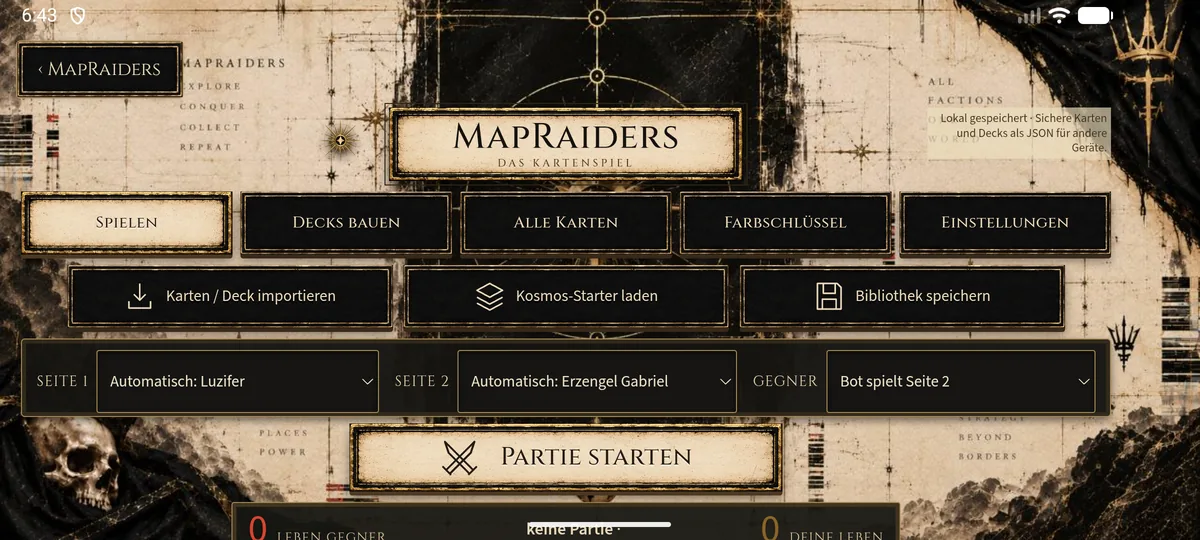
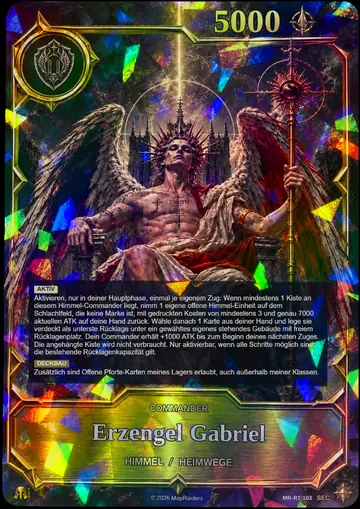
Sit down at the tableA duel at the card table: you play cards from your hand onto the battlefield and end your turn with the action bar.
Real screenshots from an earlier test build of the game. The interface in these shots is German.
The loop in five words
If you want to know how to play, start with five words. MapRaiders is a GPS game and a trading card game (TCG) in one world. Each half works on its own, and together they form a loop.
- IMoveYou walk, run or cycle. Your route is your move.
- IIClaimA closed lap turns the enclosed area into your territory.
- IIICollectYou find cards on the map, earn coins in duels and get cards on the season pass.
- IVBuildYou put fifty cards together behind one commander.
- VBattleDeck against deck in the arena.
Walk a lap, claim territory
You start the recording, walk a route and return to where you began. When the lap closes, the area inside the line becomes your territory. It counts from 150 square meters.
It does not matter whether you walk, run or cycle. MapRaiders is a walking game at its core, and a location-based game in the literal sense: the streets, squares and buildings on the map are the real ones around you. Outside, only the ground you really walked around counts; from home, your character does the walking.
An attack takes only what it walks around
Other players can attack your territory. An attacker takes only the piece enclosed by their own lap. The rest stays yours, and you take the lost piece back the same way, with a lap of your own.
Your territory stays yours
Your territory stays yours, even when you are not out for a while. You can only lose it to another player who takes it from you. Your cards and decks never expire.
Playing from home: spawn points
Spawn points are fixed starting places on the world map. They change with every card release. From there you explore the map with your character, even from your sofa.
Your RPG character’s laps become territory too. From a spawn point it conquers contested territory, on days when you cannot go out and in places on the other side of the world.
Coins for ground you walk
When you walk a lap around new ground, you earn coins for it, and in the shop coins buy card packs. The shop only takes coins earned in the game.
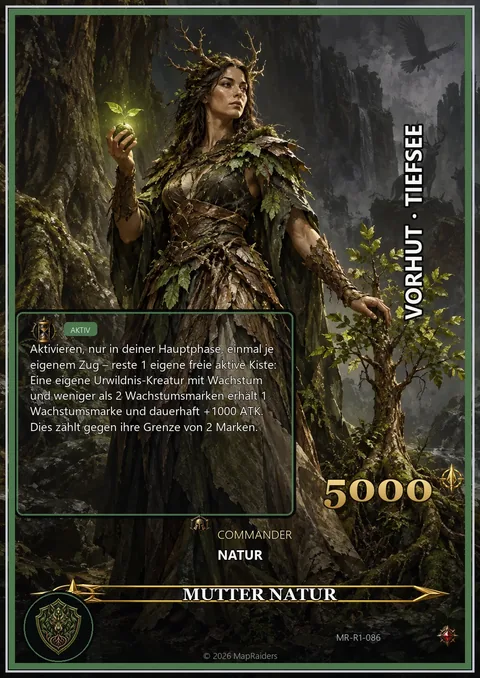
Three more ways to get cards run in the game: the card duel, the season pass, and deck building challenges for spare cards. Everything is earned by playing.
The card duel at the table
A commander leads your deck and does not count toward its fifty cards. You start with five cards in hand. Five buildings lie in front of you, each with one face-down building card underneath: these are your lives. A turn has three steps:

- Drawyou take a card from your deck.
- Activateyou play cards and use abilities.
- Attackyou go for enemy units or enemy buildings. Nobody attacks on their own first turn.
Whoever has no building left standing loses the match. You play against the bot or against other players, and in a duel nobody loses cards from their collection.
The map decides where conflicts arise; the card duel decides who makes use of them. If the owner of the ground you walk into is online, a live card duel decides who keeps it.
An evening in MapRaiders
The parts fit into each other. One evening can look like this:
- After work you walk a lap through your neighbourhood and close it where you started. The area inside becomes your territory.
- On the way, card finds lie on the map.
- At home the new cards go into your album, sorted by faction.
- You rebuild your deck around one commander and fifty cards.
- On the sofa you play a match, against the bot or against another player.
- The lap, and a duel against another player, count toward your daily tasks, weekly missions and the season pass.
Why legends stand on your street
The story behind the game is called The Collision. The seam between the dimensions tears open, and figures from all ages and worlds step onto the real map.
They belong to six factions: Human, Technology, Nature, Heaven, Hell and Cosmos. Every card belongs to one of them.
Live in the browser. Something new arrives every week.